
Joey Innes
I fly, I write systems software, and I spend more time than either on questions I haven't got round to publishing. I've written software since 2004, climbed for years, began speedflying in 2014, and now fly speedwings, parakites and paragliders; the rest of the time it's Zig and Go, mostly things that were meant to be small and weren't.
Latest
A 3,100 engine for a beginner
In seventeen days zchess went from a move generator to about 3,100 on Stockfish's strength scale, training its own neural network on a Mac and a handful of Raspberry Pis. Then I pointed it at my own games, which are a beginner's. What the measurements said, what didn't work, and why the coach turned out to be the better half.
2026
-
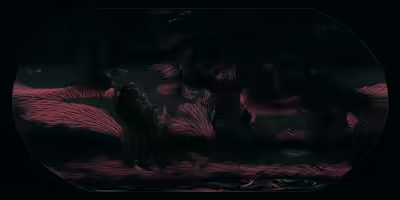
Mean surface wind, 1979–2022, from ERA5. Pink where it has strengthened, blue where it has weakened, grey where neither is significant. Something new, not ready to show yet. It started as a question — where in the world are the tall coastal dunes, and when does the wind blow square onto them? — and has grown a map, twenty thousand candidate sites scored against sixteen years of hourly reanalysis, and weather stations to keep the model honest.
Today it got a global wind layer, and this is that layer with everything else taken away: forty-four years of mean surface wind, drawn as streaks. Length is speed and brightness is how steady the direction is, which is why the trade-wind belts carry the picture and the continents show up only as quiet. No coastline is drawn.
The colour is the trend. Across the trade-wind belts the mean wind has picked up by about 0.14 knots a decade. A third of those cells have strengthened significantly, and not one has weakened.
-
Picked Peregrine back up today, twenty-one months after I left it halfway through a TLS handshake. The last commit before the gap was
Write certificateVerify and Finished, on a blocking prototype that could never have carried HTTP/2.So most of it got rewritten. Every protocol layer is now a state machine that does no I/O at all: bytes in, bytes out, never a syscall. The event loops own the sockets. That's what lets one parser run on epoll, kqueue and a new
io_uringbackend, and what will let QUIC reuse the TLS handshake later. It also makes every layer testable a byte at a time: one test feeds sixteen pipelined requests in 199 random splits and demands identical output, and it caught a real bug.HTTP/1.1 and WebSockets are done. The WebSockets used to share one thread of their own; now each stays on the worker that accepted it. Late this afternoon the TLS 1.3 server landed, checked against the RFC 8448 trace and against Zig's own TLS client for every cipher suite and key exchange, including the post-quantum
X25519MLKEM768.Six cores serving and six loading it, over loopback in Docker on an M2 Pro: about a million keep-alive requests a second where NGINX manages 0.8–0.9 million, and 8–9 million pipelined where it manages 1.2–1.5. Same machine for both, so relative rather than absolute.
io_uringworks and is no faster than epoll yet, which I didn't expect. HTTP/2 is next. -
A 3,100 engine for a beginner
In seventeen days zchess went from a move generator to about 3,100 on Stockfish's strength scale, training its own neural network on a Mac and a handful of Raspberry Pis. Then I pointed it at my own games, which are a beginner's. What the measurements said, what didn't work, and why the coach turned out to be the better half.
-
Designing the pressure, not the shape
The third post in the Foilworks series, and the one with no code in it. What a wing section is actually for, why there is no such thing as a good aerofoil, and the single budget that every trade in the field is paid out of.
-
The boundary layer, where drag and stall live
The second post in the series. The other half of aerodynamics — a film about one percent of the chord thick in which all of a wing's drag and all of its stall behaviour are decided. Two numbers stand in for the whole velocity profile, one ratio decides everything, and the two solvers each need the other's answer before either can start.
-
The question that broke Dave
Can you build a network that behaves like shared memory, with no token, no payment and no accounting of who stores what? I tried in Go two years ago. It worked, and then answering one much smaller question destroyed it. What actually failed, checked against the code — and the three answers the project has produced since.
-
How we built Soaring Spirit
Soaring Spirit is my first company, a Swiss GmbH running speedflying trips and coaching. The whole product runs as one Go binary on a Raspberry Pi in my house. Sixteen months in, this is what that choice has cost and what it has bought.
-
Two stories about air
The first in a series about aerofoil design, written while building a simulation backend called Foilworks. Air behaves in two completely different ways depending on how close to the wing you are, and nearly every practical tool in the field is built on that split. This is the half with no friction in it — where lift comes from, and why the hardest part is a single missing equation.

2025
-
Progress on the Peregrine HTTP server
As a way for me to dive deeper into Zig, I'm writing a HTTP server from scratch. This article describes some of the work I've done recently, and a few lessons that I've learned.
-
Elegance in Global Cooperation: Engineering Simplicity, Purity and Correctness
I draw parallels between engineering and social systems, suggesting that some fundamental engineering principles and concepts of game theory may be applied to improve the fairness and productivity of human cooperation at scale.
2024
-
The beginning of project Peregrine - a bleeding fast HTTP server
As a way for me to dive deeper into Zig, I'm writing a HTTP server from scratch.
-
First thoughts on Zig
I describe what I like about the Zig systems programming language, and what I don't like after a couple of weeks of tinkering.
-
Dave
Distributed KV store.
-
logd
Real-time log tailing over UDP: a map of ring buffers, a protocol that ended up in production, and three wrong answers to replay protection before WireGuard showed me the right one.
-
arpload
I wanted to put a 4K video on Arweave. The web wallet burned my AR without telling me, ArDrive insisted on bundling, so I wrote the uploader — and then made it resumable.
2023
-
First time in Madeira
Considering the Maritime alps, I looked further afield, to warmer climes. I almost went to Corsica...